Revolutionizing food production in the dark with electro-agriculture
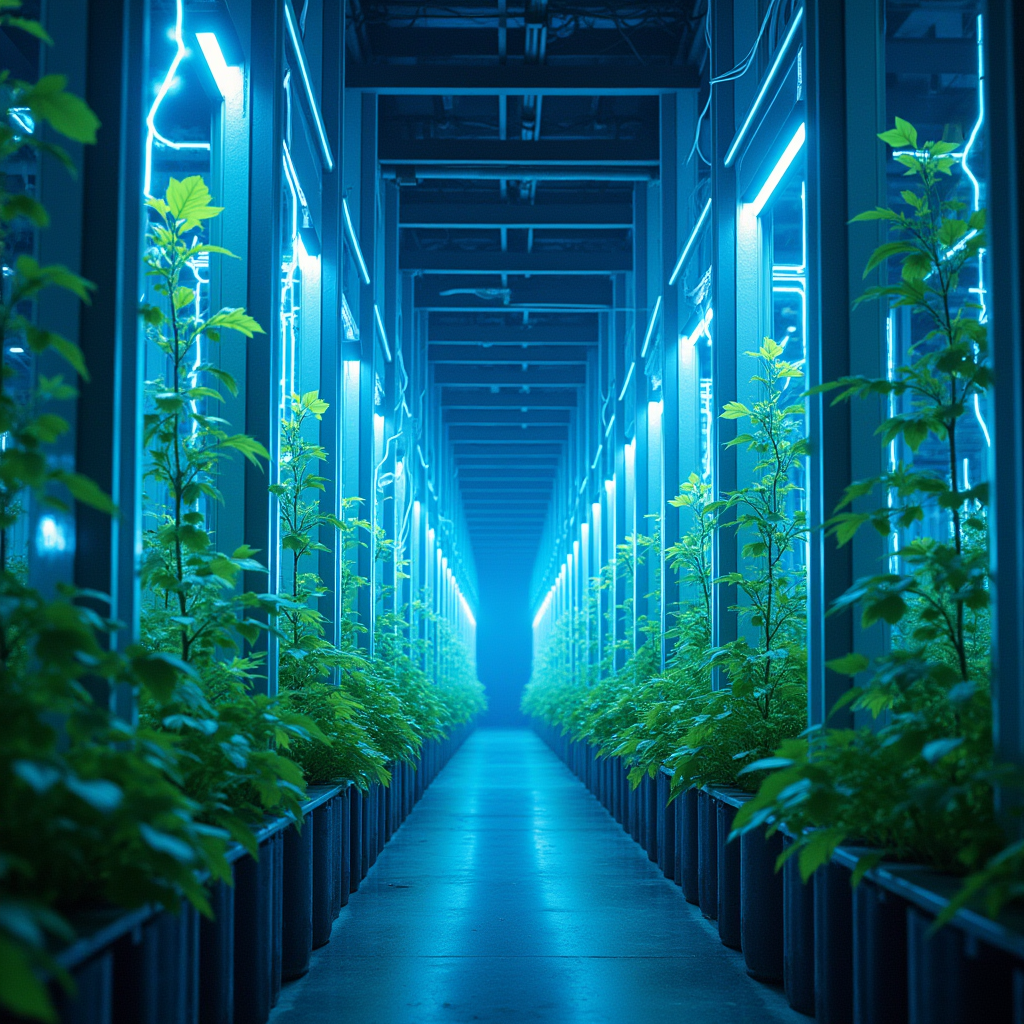
Food production is one of the greatest challenges facing humanity today. As we grapple with climate change and a rapidly growing population, innovative solutions are essential to improve food security. One such groundbreaking method is electro-agriculture. Research indicates that plants can now be engineered to produce food in the dark using significantly less land. Imagine a future where growing food occupies only 6% of the land currently used, all while thriving without sunlight!
Understanding electro-agriculture
Electro-agriculture, as proposed by bioengineers, entails a robust and innovative technique allowing plants to utilize acetate—a molecule generated through solar-powered reactions—of their own energy source. This method holds significant promise in replacing traditional photosynthesis, often criticized for its inertia, as it absorbs only around 1% of the light that can be converted into chemical energy for plants.
Why efficiency and land usage matters
Research has shown that should electro-agriculture techniques be widely adopted in the US alone, the necessary land for agricultural purposes could see a stunning reduction of 94%. Hence, this development aligns impeccably with sustainability, especially as we strive for efficient land use amid the surging global population and climate issues.
How does it work?
Imagine solar panels integrated into urban environments—perhaps on multi-story buildings—utilizing sunlight to catalyze a reaction between CO2 and water, producing acetate. Future developments could harness this novel formula enabling indoor, controlled food production systems. This transition from field to control unit is essential for maximizing efficiency and minimizing land demands.
Genetic innovation
Researchers are activating dormant metabolic pathways found in germinating plants that naturally break down stored seeds' foods. Through successful engineering, plants have begun utilizing acetate alongside traditional photosynthesis, but the long-term objective is to achieve a species capable of remaining completely independent from light. By removing the need for sunlight, we can unlock a vast array of cultivation possibilities, including not only traditional crops but also fungi, yeast, and even algae.
Future applications
The application of electro-agriculture is broad, with potential expansions to crops like tomatoes and lettuce facilitating immediate adoption. However, the focus doesn't end there—discussions have already turned to high-calorie staples like grains and root vegetables such as cassava and sweet potatoes. Utilizing high-demand crops could correctly foothold this innovative shift in farming practices.
Why this matters
What does this mean for the average person? Simply put, electro-agriculture could profoundly transform how we think about food production. Urban areas with limited farmland could potentially harness this technique to bolster local food systems, allowing cities to become self-sufficient in food production, considerably enhancing food security.
Conclusion
The prospect of electro-agriculture stands to address several critical issues regarding sustenance and environmental impacts. If we successfully implement this technology, not only could agriculture become sustainable; its revolution might provide lasting changes to global food systems. Revamping our methods of food production could help ensure a stable food supply as our climate changes and our population scales. Electra-agriculture doesn't only represent a cutting-edge innovation; it embodies a futuristic vision of resilience and adaptability in a fragile world. Are we prepared to seize this opportunity?